In brief
- Layer-1 blockchains (L1s) are the foundational networks that validate, record, and finalize transactions independently.
- Core components include network nodes, consensus mechanisms, execution layers, and native tokens.
- They include major platforms like Bitcoin, Ethereum, Solana, Cardano, and Avalanche, each using different consensus algorithms.
A layer-1, or L1, blockchain is the base network of a blockchain ecosystem. It operates independently—without relying on other chains for validation or execution—and handles everything from transaction processing to consensus and data storage on its own ledger.
Often called the mainnet or settlement layer, a layer-1 blockchain forms the ground floor upon which all other blockchain layers, including sidechains and layer-2s, are built.
Where layer-2s extend performance on top of existing networks, layer-1s stand alone. They define their own rules, run their own validators, and issue their own native tokens. Bitcoin, Ethereum, Solana, Cardano, and Avalanche all fit this description.
In this article, we will look at the history and functions of the foundational layer of Web3.
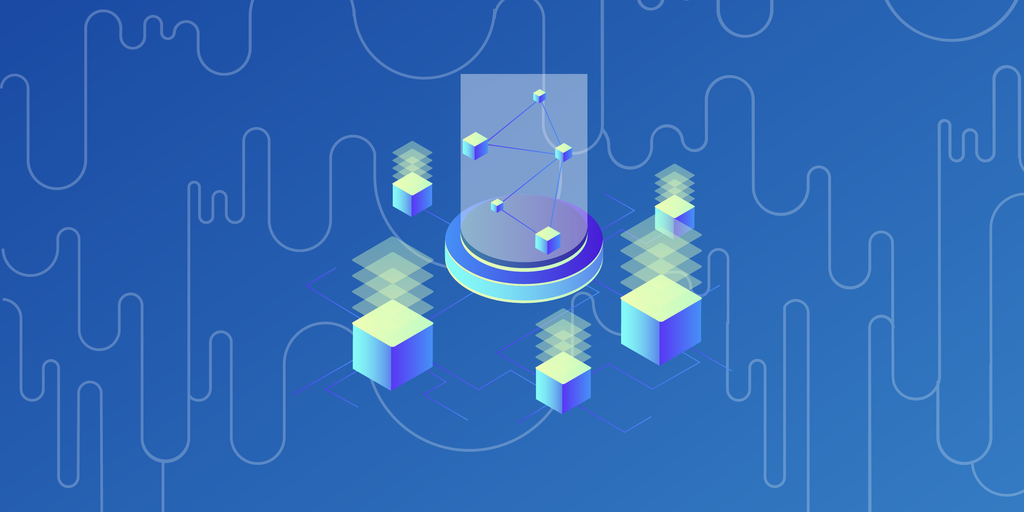
Inside a layer-1: how it’s built
Every L1 blockchain includes several core components that make it both functional and secure:
- Network nodes: Thousands of independent computers maintain identical copies of the blockchain and broadcast data to one another. Their distributed nature prevents censorship and single points of failure.
- Consensus layer: The rulebook for agreement. It determines how participants decide which transactions are valid and how blocks are added to the chain.
- Execution layer: On programmable blockchains such as Ethereum or Solana, this layer runs smart contracts: self-executing code that powers decentralized apps and automated transactions.
- Native cryptocurrency: Each L1 has its own coin that pays transaction fees, rewards validators, and supports on-chain governance. BTC secures Bitcoin, ETH powers Ethereum, and ADA drives Cardano.
How layer-1s process transactions
Across different networks, the flow is broadly the same:
- Validation: Transactions are checked to ensure they meet protocol rules and have proper signatures and balances.
- Block formation: Verified transactions are bundled into candidate blocks.
- Consensus: Nodes agree on which block to add next, using the network’s chosen algorithm.
- Finality: Once confirmed, the block becomes immutable; balances and contract data update across the network.
This cycle repeats continuously, thousands of times per day, without central oversight.
Consensus mechanisms: the heart of the blockchain
The consensus mechanism defines how a blockchain reaches agreement and shapes its speed, security, and energy profile. While there are many different consensus mechanisms, the main ones are:
- Proof of Work (PoW)–Introduced by Bitcoin, PoW miners solve cryptographic puzzles through computation. It’s extremely secure but energy-intensive and limited to around seven transactions per second (TPS).
- Proof of Stake (PoS)–Validators lock tokens as collateral to earn the right to validate blocks. It replaces energy use with economic incentives.
- Delegated Proof of Stake (DPoS)–Used by Binance Smart Chain and others, this model relies on a smaller, elected set of validators to increase efficiency—trading off some decentralization for speed.
- Proof of History (PoH)–Solana’s unique system timestamps transactions before consensus, allowing thousands of TPS and sub-second block times.
The leading layer-1 blockchains
Bitcoin (BTC) – Proof of Work: The first and most secure blockchain. Processes about 7 TPS using energy-intensive mining, emphasizing decentralization and immutability over speed.
Ethereum (ETH) – Proof of Stake: The largest programmable blockchain, supporting smart contracts, NFTs, and DeFi. After The Merge in 2022, it reduced energy use by more than 99% while laying the groundwork for scalability through rollups and upcoming sharding.
Solana (SOL) – Proof of History + PoS: Known for high throughput and low fees, Solana timestamps transactions before consensus to achieve sub-second block times.
Cardano (ADA) – Ouroboros Proof of Stake: A research-driven blockchain that emphasizes formal verification and layered architecture to separate settlement and computation.
Avalanche (AVAX) – Avalanche Consensus: Uses probabilistic sampling to reach consensus quickly. Offers sub-second finality and supports customizable subnets for app-specific chains.
Binance Smart Chain (BNB) – Delegated Proof of Stake: Operated by a limited validator set, BSC trades decentralization for performance, providing fast, low-cost transactions compatible with Ethereum’s tooling.
Timeline: major layer-1 milestones
- January 2009: Bitcoin launches, proving decentralized consensus through Proof of Work as the first fully functional blockchain.
- July 2015: Ethereum goes live, introducing programmable, Turing-complete smart contracts to the blockchain ecosystem.
- September 2017: Cardano launches its Byron mainnet, formalizing Proof of Stake with the Ouroboros protocol and establishing a layered architecture.
- September 2020: Avalanche launches its mainnet, introducing a high-speed consensus mechanism and subnet framework for customizable chains.
- September 2022: Ethereum completes The Merge, transitioning from Proof of Work to Proof of Stake and reducing energy consumption by over 99%.
- October 2023: Celestia launches as the first modular blockchain focused on data availability and consensus separation.
- August 2025: Circle unveils Arc, a stablecoin-focused layer-1, with a public testnet live in October and a mainnet planned for 2026.
Each blockchain aims to tackle the same underlying challenge: the blockchain trilemma.
The blockchain trilemma
Ethereum co‑founder Vitalik Buterin coined the term “blockchain trilemma” in 2017 to describe the challenge that blockchains cannot simultaneously maximize decentralization, scalability, and security, forcing trade‑offs between the three.
- Security – Protection against manipulation or attack.
- Scalability – Capacity to handle high volumes efficiently.
- Decentralization – Distribution of control across many independent nodes.
Scaling layer-1s
Developers continually search for ways to boost blockchain throughput without compromising decentralization—a direct response to the blockchain trilemma.
- Sharding: This technique splits the network into smaller parts, or shards, that process data in parallel to ease node workload and raise capacity. Ethereum originally planned 64 shards, but, by late 2025, shifted focus to proto-danksharding and danksharding—upgrades centered on data availability for layer-2 rollups rather than full on-chain execution. Proto-danksharding (EIP-4844) introduces data blobs to improve storage efficiency, while full danksharding remains under development.
- Consensus optimization: Moving from energy-heavy Proof of Work to Proof of Stake—like Ethereum’s 2022 Merge—drastically improves efficiency. Some newer networks mix or adapt consensus models to balance speed, cost, and security.
- Block parameters: Larger blocks and shorter intervals can increase throughput but risk centralization. Bigger blocks demand more bandwidth and storage; faster blocks raise synchronization issues and the number of orphaned blocks.
- Protocol upgrades: Bitcoin’s 2017 Segregated Witness (SegWit) is a classic example of direct layer-1 scaling. By separating signature (“witness”) data from transaction data, SegWit freed block space and allowed more transactions per block without expanding its size.
Real-world applications
Layer-1 blockchains supported DeFi, powering lending, exchanges, and stablecoins through smart contracts. Ethereum and Solana enabled NFTs and gaming, bringing digital ownership on-chain. They also improved supply-chain transparency, secured digital identity, and enabled tokenization of real-world assets like property and art.
Why they still matter
Layer-2s and sidechains help with speed, but layer-1s remain the source of truth. They provide final settlement, immutable history, and shared trust for everything built above them.
Blockchain technology has advanced far beyond its 2009 origins, and the work hasn’t slowed. In November, the Ethereum Foundation announced its next major step: the Ethereum Interoperability Layer, which would let any Ethereum L2 communicate with any other L2 instantly.
As blockchain technology evolves—from energy-heavy mining to modular, quantum-resistant architectures—layer-1 blockchains continue to define the infrastructure of the decentralized internet.
Daily Debrief Newsletter
Start every day with the top news stories right now, plus original features, a podcast, videos and more.