In brief
- Saudi Aramco installed the Kingdom’s first quantum computer, built by France-based Pasqal.
- The 200-qubit system marked Saudi Arabia’s entry into the global quantum race.
- Experts said current machines cannot yet break Bitcoin’s cryptography, but progress is accelerating.
Saudi Arabia has entered the global quantum computing race.
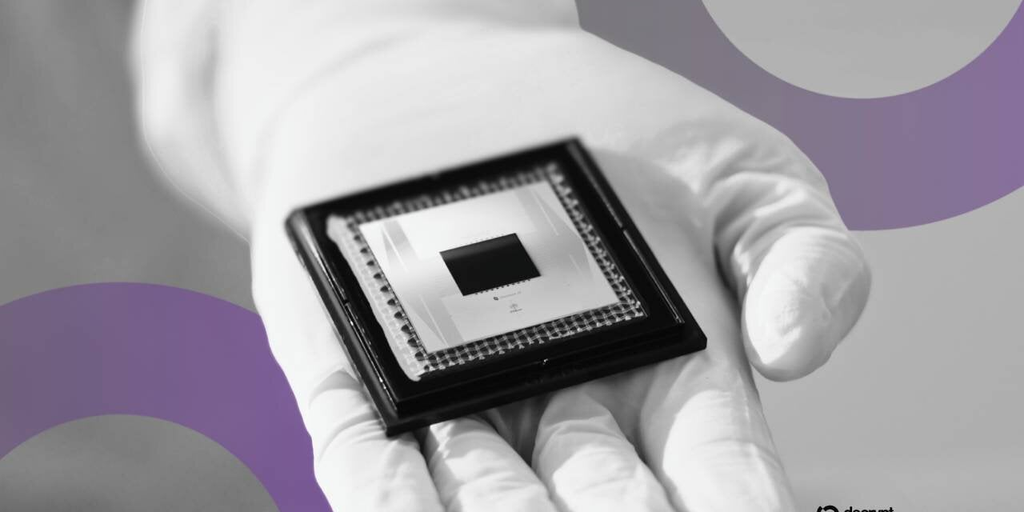
Saudi Aramco, the government-controlled energy and chemicals company, said Monday it has installed the Kingdom’s first quantum computer, in a move that adds to mounting security concerns for Bitcoin and other blockchain networks.
Aramco said the 200-qubit machine, built by Pasqal, a France-based neutral-atom quantum computing company, and installed at its Dhahran data center, has been designed for industrial applications such as energy modeling and materials research.
Pasqal said it is the most powerful system the company has delivered to date. A qubit, or quantum bit, is the basic unit of a quantum computer.
“The deployment of our most powerful quantum computer yet is a piece of history and a landmark for the Middle East’s quantum future,” Pasqal CEO Loïc Henriet said in a statement. “Pasqal continues its expansion, delivering practical quantum power to industry.”
Saudi Arabia’s move places it alongside governments in the U.S., China, the EU, the UK, Japan, India, and Canada that have funded national quantum programs intended to expand research infrastructure and train the workforce needed for future fault-tolerant systems.
Experts warn that if quantum machines ever become powerful enough, they could reveal private keys or forge signatures, allowing attackers to steal funds or crack privacy mechanisms. But just how real is that threat today?
A serious threat or a shot in the dark?
Yoon Auh, founder of Bolts Technologies, said rapid progress in quantum computing has forced security communities to take the threat seriously, amid “repeated jumps” in the technology.
“With so much effort and money going into this, breakthroughs are inevitable,” he told Decrypt. “Nobody knows when, but the threat is no longer theoretical. It still can’t break ECC or RSA today, but progress is steady.”
Auh said the motivation for nation-state investment extends beyond cryptanalysis.
“Quantum computing is the first technology that could become a global digital weapon not controlled by any political system,” he said.
Still, the research is some ways off from cracking systems like the one Bitcoin is built on.
According to research scientist Ian MacCormack, a 200-qubit system is small in practical terms, since current machines are limited by noise and short coherence times that restrict how many operations they can run.
“200 qubits is enough to do some interesting experiments and demonstrations, assuming the qubits are high quality, which is hard to do with even that few of them, but nowhere near enough to do error corrected computing of the sort you would need to run Shor’s Algorithm,” he said, referring to the a quantum algorithm for finding the prime factors of an integer.
Progress ahead
In September, researchers at Caltech unveiled a neutral-atom system with 6,000 qubits.
However, even machines of that scale are still used for research, simulations, and algorithm development rather than for attacking cryptography.
“What you need is a very long coherence time compared to the duration of your operations,” Caltech graduate student Elie Bataille told Decrypt. “If your operations are one microsecond and you have a second of coherence time, that means you can do about a million operations.”
Researchers say threatening modern cryptography would require thousands of error-corrected logical qubits, which translates to millions of physical qubits.
Although the Pasqal system did not change current blockchain security, it renewed attention on a long-term risk known as Q-Day, the moment a quantum computer becomes powerful enough to derive a private key from a public key and forge digital signatures.
The concern is that such a capability would not only undermine the cryptography used by Bitcoin but also the many security systems that underpin the global economy.
“What a quantum computer could do, and this is what’s relevant to Bitcoin, is forge the digital signatures Bitcoin uses today,” Justin Thaler, research partner at Andreessen Horowitz and associate professor at Georgetown University, told Decrypt. “Someone with a quantum computer could authorize a transaction, taking all the Bitcoin out of your accounts when you did not authorize it. That’s the worry.”
Today’s early-stage processors, including the 200-qubit Pasqal machine and Google’s 105-qubit Willow chip, remain well below the threshold needed for such attacks.
“Quantum computation has a reasonable probability, more than 5%, of being a major, even existential, long-term risk to Bitcoin and other cryptocurrencies,” Christopher Peikert, professor of computer science and engineering at the University of Michigan, told Decrypt. “But it’s not a real risk in the next few years; quantum-computing technology still has too far to go before it can threaten modern cryptography.”
Generally Intelligent Newsletter
A weekly AI journey narrated by Gen, a generative AI model.